Precisely automating glue application on outdoor-shoe outsoles
Because shoes are non-rigid, their manufacturing relies heavily on manual labor, and the automation techniques traditionally used in mass production are hard to apply. Dtrmined used computer vision and a robotic arm to build software that precisely sprays PUR glue onto outdoor-shoe outsoles for this client.
Our client — developing automation for a major Taiwanese outdoor-shoe contract manufacturer
Fulgentsun Co., Ltd. previously focused on providing automation solutions for the display-panel industry, and in 2020 entered the field of footwear automation. As its products gradually reached the production line, end customers raised more and more processes they hoped to automate, so Fulgentsun partnered with Dtrmined to accelerate product development.
The end customer for this project specializes in contract manufacturing for high-end outdoor and athletic shoe brands, with factories spread across Vietnam, China, Cambodia, and elsewhere. Because of the high-mix, low-volume nature of outdoor shoes, this customer has always led its footwear-industry peers in investing in process automation.
The challenge — a threshold traditional automation talent struggles to cross
Because the outdoor-shoe market is dominated by Europe and North America, the customer was actively adopting the more environmentally friendly moisture-curing hot-melt adhesive (PUR) to replace adhesives that emit volatile organic compounds.
However, past outsole automation solutions mostly fixed the workpiece in place and applied glue roughly over a large area. Applied to expensive and quick-to-cure PUR glue, this not only increased cost but actually required more, not fewer, people for subsequent rework.
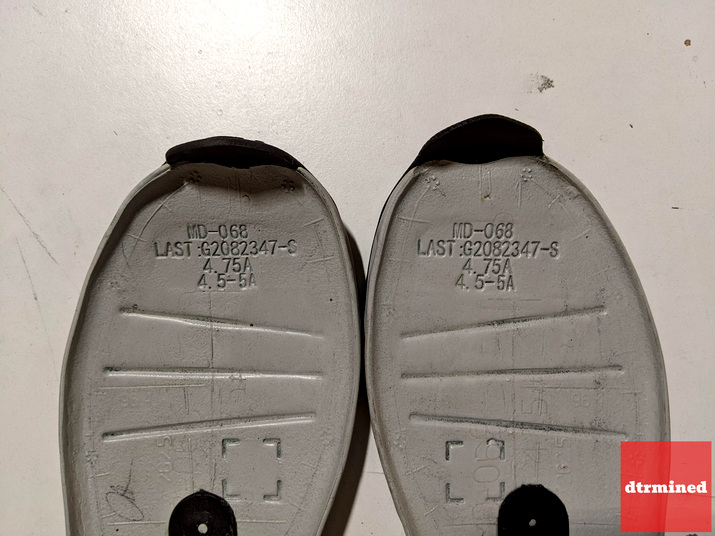
Moreover, outsoles made of rubber — limited by manual lamination and the nature of the material — vary in warpage, width, and even length, even among soles of the same model and size. This makes the mass-production methods that the automation industry has long excelled at hard to apply in footwear.
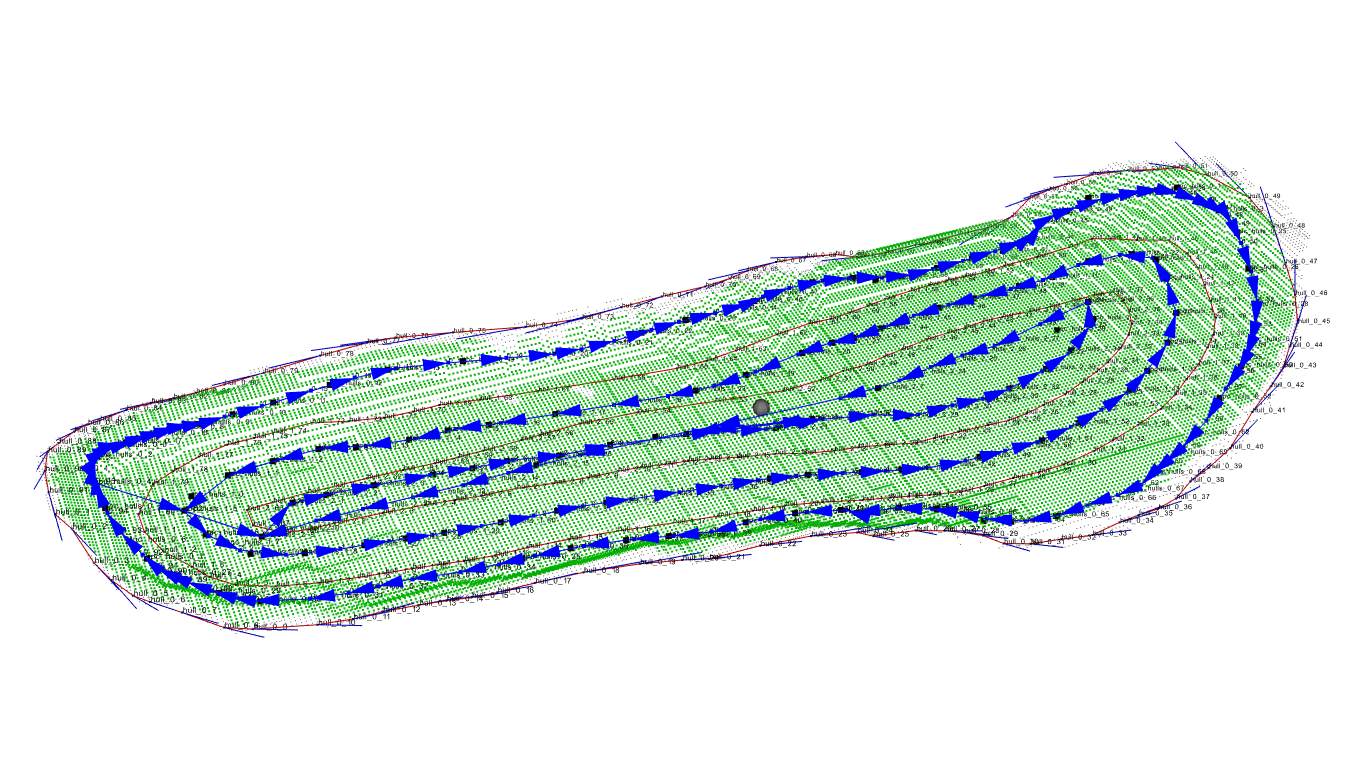
Based on these two factors, the Fulgentsun team decided to introduce 2.5D image-modeling technology in this project to overcome the challenge of large workpiece tolerances.
But companies in manufacturing automation have traditionally hired talent skilled in writing PLC programs and process control, not in technologies that were new to the industry, such as computer vision. To take on this project's R&D alone, Fulgentsun's team would have had to stop their ongoing projects and pour all their resources into figuring it out day and night — otherwise they couldn't meet the customer's expected timeline — and that was a risk Fulgentsun was unwilling to take.
The solution — Fulgentsun and Dtrmined dividing the work along their respective strengths
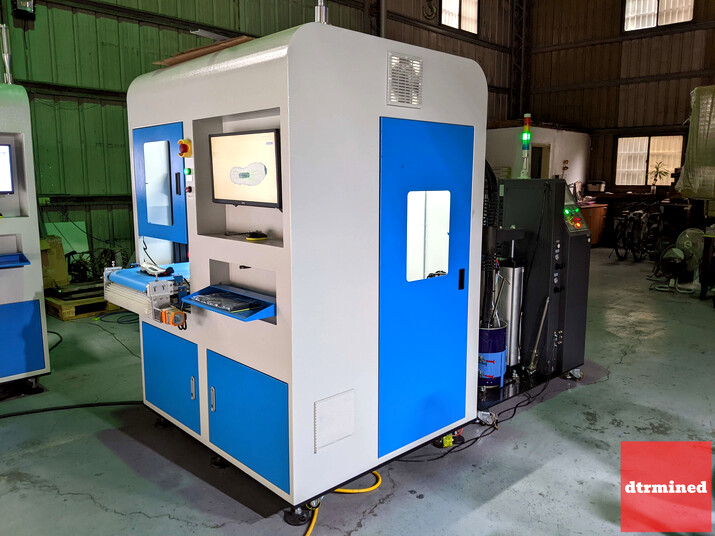
The Fulgentsun team handled mechanical design and electrical-control planning, while Dtrmined handled software design and development.
By studying the characteristics of the workpiece, Dtrmined designed algorithms that convert real-time 2.5D images of the workpiece into robotic-arm toolpaths accurately and efficiently enough for the machine's throughput to meet the real needs of the production floor. The software was built on ROS, with an architecture designed to avoid vendor lock-in and preserve the flexibility to swap out components in the future.
Considering that the end customer's production plants are mostly located overseas in Southeast Asia while the equipment supply chain is all in Taiwan, Dtrmined designed functionality to maintain and update the software securely over the internet.
The result — a prototype within three months
Within three months of the project's kickoff, the Fulgentsun team and Dtrmined delivered the first prototype, and continued to improve yield and utilization, with production efficiency conservatively estimated at 120 outsoles per hour.
The remote-maintenance feature Dtrmined built also means that even if a black-swan event like the pandemic were to erupt again, the end customer could still receive real-time software support.
Once the equipment goes into actual production, the end customer can deploy labor more flexibly, control raw-material usage more precisely, and give employees a safer working environment.